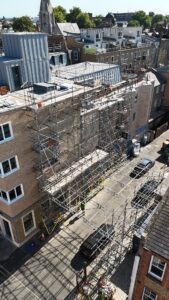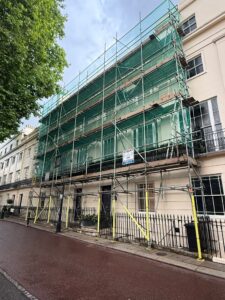
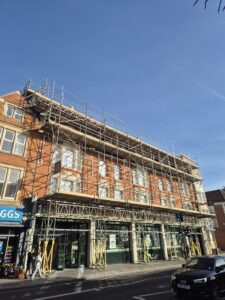
Commercial scaffolding projects in London require more than simply providing access to a building. Contractors, developers and property managers need a scaffolding company that can plan around site access, public safety, working trades, programme requirements and the practical challenges of working in busy London locations.
At A.D. Scaffolding Ltd, we provide commercial scaffolding across London, with a strong focus on South and South West London. Our work ranges from refurbishment and external decoration projects to temporary roofs, loading bays, access scaffolds and more complex structures requiring bespoke scaffold design.
In this guide, we explain what contractors and property managers should consider when arranging commercial scaffolding in London and how good planning can help keep a project safe, efficient and on schedule.
What Is Commercial Scaffolding?
Commercial scaffolding is designed to provide safe and practical access for trades working on larger, longer-term or more complex projects. Unlike a straightforward domestic scaffold, commercial projects often require additional planning around multiple trades, public access, deliveries, loading requirements and the overall construction programme.
In London, commercial scaffolding is commonly used for external refurbishment, painting and decorating, roofing works, brickwork and repointing, window replacement, façade repairs and planned maintenance.
Every project is different. A scaffold for a retail property on a busy high street may require a completely different approach from scaffolding around a residential block, school or commercial development. Access restrictions, pavement licences, protection for the public and the need for specialist scaffold design can all influence how the scaffold is planned.
Who Uses Commercial Scaffolding in London?
Commercial scaffolding is required across a wide range of sectors in London. We regularly work with building contractors, developers, property managers and specialist trades that need safe and reliable access to complete their work.
Projects can include residential blocks, commercial properties, schools, retail premises and larger refurbishment projects. Depending on the works, the scaffold may need multiple working lifts, loading bays, temporary roof protection, debris netting, Monoflex sheeting or additional protection for pedestrians and the public.
For contractors and property managers, it is important that the scaffold is planned around the actual programme of works. Different trades may require access to different elevations and working heights, so discussing these requirements before erection can avoid unnecessary alterations later in the project.
Planning Commercial Scaffolding in London
Good planning is one of the most important parts of any commercial scaffolding project. Before erection begins, the scaffold contractor should understand the building, the work being carried out, the access required by each trade and any restrictions around the site.
In London, space is often limited. Scaffolding may need to be erected alongside busy pavements, roads, neighbouring properties or restricted access areas. Some projects may require a scaffold licence from the local authority, while more complex structures may require a bespoke scaffold design.
Early planning also allows requirements such as loading bays, access towers, protection fans, debris netting, Monoflex sheeting and scaffold alarms to be considered before work starts. This can reduce alterations during the project and help contractors keep the works running efficiently.
TG20 Compliance and Bespoke Scaffold Design
Commercial scaffolding must be planned and erected to provide a safe working structure for the intended use. Many standard scaffold configurations can be erected in accordance with recognised TG20 guidance, provided they fall within the relevant compliance criteria.
More complex scaffolds may require a bespoke design prepared by a qualified scaffold designer or engineer. This can include structures such as large temporary roofs, complex cantilevered scaffolds, bridging arrangements, loading bays outside standard configurations and scaffolds where site conditions require a specialist solution.
Identifying the need for a design at an early stage is important on commercial projects. It allows the scaffold arrangement, loading requirements and access for different trades to be considered before erection begins, helping to avoid delays or costly changes later.
Public Safety, Netting and Scaffold Alarms
Public safety is a major consideration on commercial scaffolding projects, particularly where scaffolding is erected close to pavements, entrances, shops, residential buildings or other areas used by the public.
Depending on the location and type of work, additional measures may include debris netting, Monoflex sheeting, protection fans, pedestrian protection and controlled access to the scaffold. The exact requirements should be considered during the planning stage and adapted to the individual site.
Scaffold alarms can also provide additional security, particularly on longer-term projects or sites in busy London locations. They can help deter unauthorised access outside working hours and provide additional protection for the scaffold, building and materials on site.
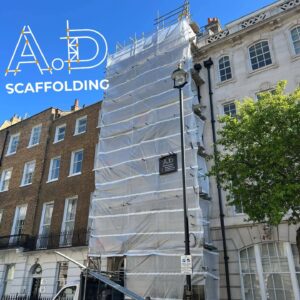
Temporary Roofs, Loading Bays and Specialist Access
Commercial projects often require more than a standard access scaffold. Depending on the type of work, additional structures may be needed to keep the project moving safely and efficiently.
Temporary roof scaffolding can provide weather protection during roof replacement, structural works, loft conversions and major refurbishment projects. This can be particularly important in London, where changing weather conditions can affect the programme and leave an exposed building vulnerable to water damage.
Loading bays can provide designated areas for materials to be loaded and stored at working level, while access towers, bridging sections and other specialist arrangements can be incorporated where required. The scaffold should be planned around the needs of the project rather than altered repeatedly once work has started.
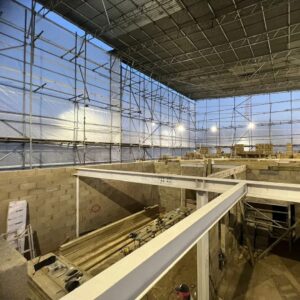
Scaffold Licences and Working on London Streets
Many commercial scaffolding projects in London involve working on or close to the public highway. Where part of the scaffold needs to stand on a pavement or other public highway, permission from the relevant highway authority may be required before erection can begin.
The requirements can vary depending on the location, pavement width, pedestrian access and the size and configuration of the scaffold. Busy streets and restricted sites may also require additional measures such as pedestrian management, protection fans, barriers or traffic management.
Allowing enough time for licences and approvals is important when planning a commercial project. Arranging these requirements early can help prevent delays to the scaffold erection date and the wider construction programme.
Scaffold Inspections During Commercial Projects
Regular scaffold inspections are an important part of managing a commercial project safely. Scaffolding should be inspected before first use, at the required intervals while it remains in use, and following circumstances that could affect its safety, such as significant alterations or severe weather.
On longer commercial projects, inspections should be properly recorded and coordinated with the site team. Contractors should also make sure that unauthorised alterations are not made to the scaffold by other trades.
If the scaffold needs to be adapted as the project progresses, alterations should be discussed with the scaffolding contractor. This helps ensure that working platforms, access points and other parts of the structure remain suitable for the work being carried out.
Choosing a Commercial Scaffolding Contractor in London
Choosing the right scaffolding contractor is about more than comparing prices. Commercial projects require reliability, good communication and the ability to coordinate scaffolding works with the wider construction programme.
Contractors and property managers should consider experience, insurance, health and safety standards, scaffold design capabilities and the ability to respond when alterations or additional access are required during the project.
A well-planned scaffold should provide the required access from the beginning, minimise disruption to other trades and remain suitable throughout the different stages of the project.
Commercial Scaffolding Across London
A.D. Scaffolding Ltd provides commercial scaffolding for contractors, developers, property managers and specialist trades across London, with a strong focus on South and South West London.
We can provide access scaffolding, temporary roofs, loading bays, scaffold alarms, debris netting, Monoflex sheeting and specialist scaffold solutions for refurbishment, roofing, decoration and maintenance projects.
Every project is assessed individually so that access, site restrictions and the requirements of the different trades can be considered before erection begins.
Need Commercial Scaffolding in London?
If you are planning a commercial refurbishment, maintenance, roofing or external works project and need reliable scaffolding, contact A.D. Scaffolding Ltd to discuss the project or arrange a site visit.
We can review the access requirements, proposed works and site conditions before providing a clear quotation for the scaffolding required.